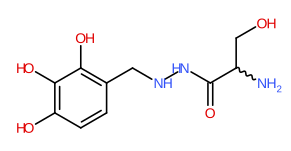
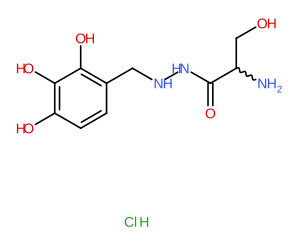
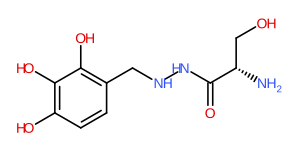
The combination of levodopa and benserazide is an anti-Parkinsonian agent. Levodopa itself is the metabolic precursor of dopamine. In Parkinson's disease, dopamine is depleted to a large degree in the striatum, pallidum, and substantia nigra in the central nervous system (CNS). The administration of levodopa to treat the disease is subsequently proposed to facilitate raises in the levels of available dopamine in these areas. The metabolism of levodopa to dopamine occurs via the enzyme dopa decarboxylase, although unfortunately, this metabolism can also occur in extracerebral tissues. As a result, the full therapeutic effect of an administered dose of levodopa may not be obtained if portions of it are catabolized outside of the CNS and various patient adherence diminishing extracerebral side effects due to the extracerebral presence of dopamine like nausea, vomiting, or even cardiac arrhythmias can also happen. Subsequently, a peripheral decarboxylase inhibitor like benserazide, which blocks the extracerebral decarboxylation of levodopa, when administered in combination with levodopa has obvious and significant advantages. Such benefits include reduced gastrointestinal side effects, a more rapid and complete response at the initiation of therapy, and a simpler dosing regimen. It is important to note, however, that benserazide is hydroxylated to trihydroxybenzylhydrazine in the intestinal mucosa and the liver, and that as a potent inhibitor of the aromatic amino acid decarboxylase, it is this trihydroxybenzylhydrazine metabolite of benserazide that mainly protects levodopa against decarboxylation to dopamine in the gut and also around the rest of the body outside of the blood-brain barrier. Regardless, because Parkinson's disease progresses even with the therapy of levodopa and benserazide, this kind of combined therapy is only ever indicated if it is capable of improving the quality of life and adverse effect profile of using such drugs for Parkinson's patients and there is little to be gained by switching to or starting this combination therapy if patients are already being managed with stable, effective, and well-tolerated levadopa-only therapy. Finally, it is also proposed that benserazide hydrochloride may be able to treat beta thalassaemia by maintaining the active expression of the gene for fetal hemoglobin so that constant production of fetal hemoglobin may replace the missing adult hemoglobin variation that is characteristic of patients with the condition, thereby decreasing the need for blood transfusion therapy. [1]