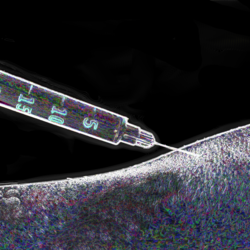
Diazepam
| Valium | |
|---|---|
 |
| Salts [] | |
|---|---|
| Diazepam hydrochloride | |
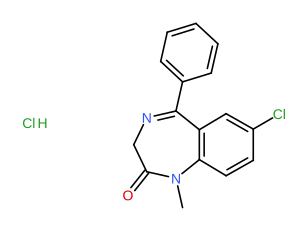 |
| Molecular structure drawn from PubChem coordinates |
| Physical properties [] | |
|---|---|
| Molecular mass | 284.74 g/mol [1] |
| Appearance | Colorless to light yellow crysytals [1] |
| Odor | Practically no odor [1] |
| Melting point | 257 to 259 °F (NTP, 1992) [1] |
| Decomposition | When heated to decomp it emits very toxic fumes of hydrogen chloride and NO(x) [1] |
| Solubility | less than 1 mg/mL at 68 °F (NTP, 1992) [1] |
| Predicted LogP | 3 [1] |
| Structural Identifiers [] | |
|---|---|
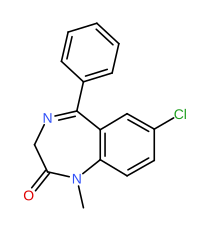
| Molecular formula | C16H13ClN2O |
| IUPAC name | 7-chloro-1-methyl-5-phenyl-3H-1,4-benzodiazepin-2-one |
| SMILES | CN1C(=O)CN=C(C2=C1C=CC(=C2)Cl)C3=CC=CC=C3 |
| InChI | InChI=1S/C16H13ClN2O/c1-19-14-8-7-12(17)9-13(14)16(18-10-15(19)20)11-5-3-2-4-6-11/h2-9H,10H2,1H3 |
| InChIKey | AAOVKJBEBIDNHE-UHFFFAOYSA-N |
| CAS number | 439-14-5 |
| UNII | Q3JTX2Q7TU |
| PubChem CID | 3016 |
| Pharmacokinetics[] | |
|---|---|
| Onset | 15–60 minutes orally and 1–3 minutes IV[3] |
| Elimination half-life | (50 hour); 20–100 hour (32–200 hour for main active metabolite desmethyldiazepam)[4] |
| Metabolism | Liver – CYP2B6 (minor route) to desmethyldiazepam, CYP2C19 (major route) to inactive metabolites, CYP3A4 (major route) to temazepam |
| Excretion | Kidney |
| Routes of administration | Oral, intramuscular, intravenous, rectal, intranasal, buccal[5] |
| Dependence liability | High[6] |
| Addiction liability | Moderate[7][8] |
| Toxicity [] | |
|---|---|
| LD50 | Mouse: - oral: 278 mg/kg - subcutaneous: 300 mg/kg - intraperitoneal: 220 mg/kg Rat: - oral: 710 mg/kg - oral: 1200 mg/kg [1] |
| Dosing[] |
|---|
| Oral [] | |
|---|---|
| Light | ≤ 9.5 mg(30x - 25.6%) |
| Common | 9.5 - 10 mg(37x - 31.6%) |
| Strong | 10 - 20 mg(37x - 31.6%) |
| Heavy | 20 - 29.2 mg |
| Extreme | 29.2 mg +(13x - 11.1%) |
Statistically derived dosages via DBI-IGS (archived by anodyne.wiki) We do not take any responsibility for medical complications or loss of life sustained by following these dosages blindly. |
Diazepam (also known as Ansiolisina, Diazemuls, Apaurin, Faustan, Relanium, Seduxen, Sibazon, Stesolid, Atensine or Bialzepam) is a depressant substance of the aniline and benzodiazepine class.
Chemistry
Salts []
Stereochemistry []
Diazepam is achiral.
Druglikeness
Lipinski's rule of five
Diazepam matches Lipinski's rule of five.Reagents
There are currently 6 reagent-interactions on DrugsPRO
| Reagent | Color change | Description |
|---|---|---|
| Marquis | no color change | |
| Mecke | light yellow | |
| Mandelin | no color change | |
| Simon's | no blue color change | |
| Zimmermann | violet / purple | |
| Gallic | no color change |
Pharmacology
ATC Classification
- nervous system (N)
- psycholeptics (N05)
- anxiolytics (N05B)
- benzodiazepine derivatives (N05BA)
- (N05BA01)
- diazepam (N05BA01)
MeSH Classification
- adjuvants, anesthesia (M0001144)
- anticonvulsants (M0001382)
- antiemetics (M0001391)
- hypnotics and sedatives (M0010885)
- muscle relaxants, central (M0014240)
- anti-anxiety agents (M0021771)
- anesthetics, intravenous (M0027999)
- gaba modulators (M0028093)
Mechanism of action []
Diazepam is a benzodiazepine tranquilliser with anticonvulsant, sedative, muscle relaxant and amnesic properties. Benzodiazepines, such as diazepam, bind to receptors in various regions of the brain and spinal cord. This binding increases the inhibitory effects of gamma-aminobutyric acid (GABA). GABAs functions include CNS involvement in sleep induction. Also involved in the control of hypnosis, memory, anxiety, epilepsy and neuronal excitability. [1]
Interactions []
Interaction mechanisms documented in KEGG DRUG (number of interacting drugs):
| CYP3A4 | metabolism / inhibition / induction | 768 (32 contraindicated) |
|---|---|---|
| CYP2C19 | metabolism / inhibition / induction | 123 (1 contraindicated) |
| GABRA1 | shared target | 52 |
| GABRA2 | shared target | 49 |
| GABRA3 | shared target | 49 |
| GABRA4 | shared target | 49 |
| GABRA5 | shared target | 49 |
| GABRA6 | shared target | 49 |
| GABRB1 | shared target | 49 |
| GABRB2 | shared target | 49 |
| GABRB3 | shared target | 49 |
| GABRD | shared target | 49 |
| GABRE | shared target | 49 |
| GABRG1 | shared target | 49 |
| GABRG2 | shared target | 49 |
| GABRG3 | shared target | 49 |
| GABRP | shared target | 49 |
| GABRQ | shared target | 49 |
Medical side effects []
214 side effects listed on drug labels in SIDER 4.1 (diazepam).
- Somnolence
- Drowsiness
- Ataxia
- Asthenia
- Fatigue
- Hiccups
- Vertigo
- Multiple fractures
- Fracture
- Abdominal pain
- Gastrointestinal pain
- Acidosis
- Aggression
- Agranulocytosis
- Amblyopia
- Amnesia
- Memory loss
- Anaphylactic shock
- Anaemia
- Anger
- Rage
- Decreased appetite
- Arrhythmia
- Arthralgia
- Musculoskeletal discomfort
- Myalgia
- Asthma
- Back pain
- Mental disorder
- Infection
- Confusional state
- Feeling abnormal
- Conjunctivitis
- Constipation
- Cough
- Cough increased
- Cyanosis
- Dysphagia
- Dehydration
- Delusion
- Depersonalisation
- Depression
- Dermatitis exfoliative
- Diarrhoea
- Diplopia
- Dizziness
- Syncope
- Lightheadedness
- Dysarthria
- Slurred speech
- Osteoarthritis
- Dysgeusia
- Dyspepsia
- Digestion impaired
- Dyspnoea
- Ecchymosis
- Grand mal convulsion
- Dermatitis
- Rash
- Eye disorder
- Faecal incontinence
- Gastrointestinal disorder
- Gynaecomastia
- Hallucination
- Headache
- Cardiac arrest
- Cardiac disorder
- Cardiac failure
- Blood disorder
- Hostility
- Hypersensitivity
- Type I hypersensitivity
- Hyperventilation
- Hypotension
- Orthostatic hypotension
- Body temperature decreased
- Hypothermia
- Incontinence
- Libido increased
- Disturbance in sexual arousal
- Jaundice
- Laryngospasm
- Lethargy
- Leukopenia
- Dyskinesia
- Movement disorder
- Muscle spasms
- Hypotonia
- Muscle relaxant therapy
- Mydriasis
- Myocardial infarction
- Acute coronary syndrome
- Nausea
- Nervous system disorder
- Nervousness
- Tension
- Neutropenia
- Nightmare
- Hypoaesthesia
- Sensory loss
- Nystagmus
- Otitis media
- Pain
- Pallor
- Palpitations
- Panic reaction
- Phlebitis
- Pneumonia
- Pruritus
- Psychotic disorder
- Hyperacusis
- Anorectal disorder
- Renal failure
- Rhinitis
- Salivary hypersecretion
- Shock
- Sinusitis
- Sleep disorder
- Speech disorder
- Hyperhidrosis
- Swelling
- Loss of consciousness
- Tachycardia
- Thirst
- Thrombocytopenia
- Erythema
- Urinary incontinence
- Urinary tract infection
- Urethral disorder
- Urinary tract disorder
- Urticaria
- Angiopathy
- Vasodilation procedure
- Venous thrombosis
- Visual impairment
- Visual disturbance
- Abnormal vision
- Vomiting
- Dry mouth
- Urinary retention
- Chills
- Stupor
- Depressed level of consciousness
- Alertness decreased
- Mood swings
- Affect lability
- Oedema peripheral
- Hypokinesia
- Hepatic function abnormal
- Drug withdrawal syndrome
- Injection site reaction
- Injury
- Muscular weakness
- Myasthenia
- Prothrombin level increased
- Skin discolouration
- Blood thromboplastin decreased
- Abnormal faeces
- Respiratory arrest
- Malnutrition
- Skin disorder
- Muscle twitching
- Increased appetite
- Proctalgia
- Rectal tenesmus
- Anorectal discomfort
- Burning rectal
- Abnormal behaviour
- Agitation
- Excitability
- Hyperkinesia
- Hyperexcitation
- Thinking abnormal
- Mental disability
- Cerebration impaired
- Derealisation
- Memory impairment
- Anterograde amnesia
- Discomfort
- Tenderness
- Respiratory depression
- Pulmonary function test decreased
- Emotional poverty
- Euphoric mood
- Disturbance in attention
- Heart rate irregular
- Dysuria
- Strangury
- Erectile dysfunction
- Rectal haemorrhage
- Hepatobiliary disease
- Floppy infant
- Dependence
- Vision blurred
- Photosensitivity reaction
- Hyperpyrexia
- Suicidal ideation
- Balance disorder
- Bradycardia
- Transaminases increased
- Lymphadenopathy
- Coordination abnormal
- Emotional distress
- Hallucinations, mixed
- Hyporeflexia
- Local reaction
- Insomnia
- Respiratory failure
- Hypoventilation
- Increased bronchial secretion
- Paraesthesia
- Cardiovascular insufficiency
- Loss of libido
- Hypoxia
Indications
- Agitation
- Alcohol withdrawal syndrome
- Anxiety
- Anxiety disorder
- Anxiety neurosis
- Anxiety state
- Apprehension
- Athetosis
- Aura
- Body temperature increased
- Cerebral palsy
- Convulsion
- Convulsion in childhood
- Convulsive disorder
- Convulsive seizure
- Delirium
- Distress
- Epilepsy
- Inflammation
- Insomnia
- Irritability
- Migraine
- Muscle spasms
- Muscle spasticity
- Myoclonus
- Paraplegia
- Psychotic disorder
- Sleep terror
- Somnambulism
- Status epilepticus
- Stiff person syndrome
- Tension
- Tension headache
- Tetanus
- Trauma
- Tremor
- Unrest
Subjective effects []
| 0xea / Diazepam [] | |
|---|---|
Routes:
| |
| a1ko / Diazepam [] | |
|---|---|
Routes:
| |
| alina / Diazepam [] | |
|---|---|
Routes:
| |
| bonzi / Diazepam [] | |
|---|---|
Routes:
| |
| emily / Diazepam [] | |
|---|---|
Routes:
| |
| magnus / Diazepam [] | |
|---|---|
Routes:
| |
| Mere / Diazepam [] | |
|---|---|
| nervewing / Diazepam [] | |
|---|---|
| Pilz / Diazepam [] | |
|---|---|
Routes:
| |
| vivi / Diazepam [] | |
|---|---|
Routes:
| |
Experience reports
- "The Time I Got Spike With a Mystery Hallucinogen During a Summer Camp Staff Orgy" by I_Am_Denny_King (33 upvotes)
- "Every Drug I've taken so far (AMA)" by Used-Philosopher-408 (26 upvotes)
- "LSD, LSA, weed, alcohol, nicotine and nitrous trip report" by 420gayspacecommunist (24 upvotes)
- "The Sexual enlightenment of 20MG 5-HO-MET (NSFW)" by ketzk (18 upvotes)
- "Friend on 500ug LSD accidentally took 600 mg of DXM and had a crazy ego death." by soupkid5 (15 upvotes)
- "Scary ayahuasca trip report (+diazepam and aripiprazole)" by eldense (14 upvotes)
- "The Unexpected and Unaticipated Spiritual Healing of 4-HO-MET" by ketzk (13 upvotes)
- "I’ve tried shrooms 4 times now and I’m not sure what to think. 3 times I’ve ended up sobbing and hopeless, but then feel great the next day - like I dealt with some shit. I want a more positive experience." by mmmushTek (11 upvotes)
- "I had a seizure after taking 2.5g of mushrooms. Please be careful — I thought they were harmless" by WickedBitchofThe (10 upvotes)
- "Caffeine, Nicotine, Diazepam - A day of opposites" by [deleted] (9 upvotes)
- "MXP 1P LSD" by Paranoid_Fish_101 (8 upvotes)
- "(D. Stramonium/LSD/n2O/Cannabis/Various. pharms) - A hazy recollection." by pulverstaden (6 upvotes)
- "25mg valium, ketamine and NEP trip report" by Ok_Can_309 (6 upvotes)
- "The Holy Trinity (Diazepam, Alcohol and Codeine)" by NorthernWine (5 upvotes)
- "What was in that gummy? A "cannabis oil" trip report" by nils_olav_III (4 upvotes)
- "Diazepam + Oxycodon (1/10 can't recommend)" by vapedontsmoke (4 upvotes)
- "Chemical-catalysed synthesisc of environmental and imaginary visual imagery" by Bjehsus (4 upvotes)
- "There are 45 psychedelic and dissociative trip reports in the Drug Users Bible: Download a free copy from here. Whether psychedelics are used for recreation, you need to look after yourself. Stay safe." by DMTrott (3 upvotes)
- "Bonkers dreams, inability to type, then sleep (22.5mg hydrocodone / 20mg Diazepam / 1050 acetaminophen)" by Throw808080Away80808 (3 upvotes)
- "Insane Ketamine R-Type experience/Trip story or possible overdose or NDE/laced" by SpacedOutGinger (2 upvotes)
- "3 meo pcp and ptsd? Life changing" by wizardslashmagi (2 upvotes)
- "What was in that gummy? Re-written by ChatGPT in the style of a Terrence McKenna trip report" by nils_olav_III (1 upvotes)
- "Reposting an old post. This time in the right channel. Enjoy the report. " by GoodAd2131 (1 upvotes)
- "Reposting an old post. This time in the right channel. Enjoy the report. " by GoodAd2131 (1 upvotes)
- "Vaccination anxiety relief and a psychonautical "study"" by PurveyorOfCacti (1 upvotes)
- "Out of body experience on Butane" by Ohtoboeh (0 upvotes)
Legal status []
- Australia: Diazepam is a Schedule 4.[9]
- Brazil: Diazepam is a B1.
- Canada: Diazepam is a Schedule IV.
- Germany: Diazepam is Prescription only/Anlage III.
- New Zealand: Diazepam is a Class C5.
- United Kingdom: Diazepam is a Class C under the "Misuse of Drugs Act 1971".[10][11]
- United States: Diazepam is a Schedule IV under the "Controlled Substances Act".[12]
- European Union: Diazepam is Prescription only.
- United Nations: Diazepam is a Psychotropic schedule IV.
- Other: Diazepam is a SE: Förteckning IV.[13][14]
External links []
References []
National Center for Biotechnology Information. PubChem Compound Summary for CID 3016, Diazepam. Accessed November 20, 2026. https://pubchem.ncbi.nlm.nih.gov/compound/3016
U.S. Food and Drug Administration; National Center for Advancing Translational Sciences. Diazepam. UNII: Q3JTX2Q7TU. Global Substance Registration System. Accessed November 20, 2026. https://gsrs.ncats.nih.gov/ginas/app/beta/substances/Q3JTX2Q7TU
Dhaliwal JS, Rosani A, Saadabadi A. Diazepam. StatPearls [Internet]. 2026. PMID 30725707. https://www.ncbi.nlm.nih.gov/books/NBK537022/#:~:text=15-60_minutes
Diazepam Tablets BP {{Val|10|u=mg}} – Summary of Product Characteristics (SmPC). (emc). 16 September 2019. https://www.medicines.org.uk/emc/product/4522/smpc
Valtoco – diazepam spray. DailyMed. 13 January 2020. https://dailymed.nlm.nih.gov/dailymed/drugInfo.cfm?setid=1a8bcc90-68fa-474d-832c-0df01e825f39
Edmunds M, Mayhew M. Pharmacology for the Primary Care Provider. Mosby. 2013. https://books.google.com/books?id=8FwdEsvnw8oC&pg=PA545
Clinical Addiction Psychiatry. Cambridge University Press. 2010. https://books.google.com/books?id=xD-R7Z27UBEC&pg=PA156
Ries RK. Principles of addiction medicine. Wolters Kluwer/Lippincott Williams & Wilkins. 2009. https://books.google.com/books?id=j6GGBud8DXcC&pg=PA106
Valium. NPS MedicineWise. 31 January 2020. https://www.nps.org.au/medicine-finder/valium-tablets#full-pi
Misuse of Drugs Act 1971. Legislation.gov.uk. https://www.legislation.gov.uk/ukpga/1971/38/schedule/2/part/III/paragraph/1
Diazepam Injection BP Summary of Product Characteristics (SmPC). emc. 17 January 2022. https://www.medicines.org.uk/emc/product/6274/smpc
Libervant- diazepam film. DailyMed. 27 April 2024. https://dailymed.nlm.nih.gov/dailymed/drugInfo.cfm?setid=12527569-8eb3-4624-b3c0-5c0e0c5f88c9
Diazepam Accord, Tablett 5 mg. FASS. 19 September 2022. https://fass.se/health/product/20141202000055/fass-text
Stesolid®, Tablett 5 mg. FASS. 8 November 2023. https://fass.se/health/product/19670228000021/fass-text
Data sources []
| Source | Status | Updated (UTC) |
|---|---|---|
| dosing | ok | 2026-11-20 04:10:46 |
| drugspro | ok | 2026-11-20 04:10:42 |
| erowid | missing (no Erowid substance of that name) | 2026-11-20 04:10:42 |
| gsrs | ok | 2026-11-20 04:10:43 |
| hmdb | missing (hmdb.ca refused automated access to HMDB0014967) | 2026-11-20 04:10:42 |
| kegg | ok | 2026-11-20 04:10:45 |
| pubchem | ok | 2026-11-20 04:10:42 |
| ok | 2026-11-20 04:10:42 | |
| sider | ok | 2026-11-20 04:10:43 |
| structure | ok | 2026-11-20 04:10:42 |
| wikipedia | ok | 2026-11-20 04:10:42 |