Diclofenac
| Diclofenac | |
|---|---|
 |
| Salts [] | |
|---|---|
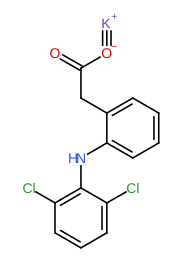
| Potassium diclofenac | |
 | |
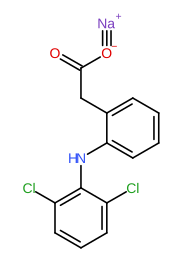
| Sodium diclofenac | |
 |
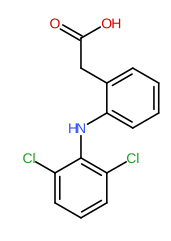
| Molecular structure drawn from PubChem coordinates |
| Rotamer [] | |
|---|---|
| Conformer structure via 3Dmol.js |
| Physical properties [] | |
|---|---|
| Molecular mass | 296.10 g/mol [1] |
| Appearance | Crystals from ether-petroleum ether [1] |
| Melting point | 283-285 °C [1] |
| Solubility | 2.37 mg/L (at 25 °C) [1] |
| Predicted LogP | 4.4 [1] |
| Structural Identifiers [] | |
|---|---|
| Molecular formula | C14H11Cl2NO2 |
| IUPAC name | 2-[2-(2,6-dichloroanilino)phenyl]acetic acid |
| SMILES | C1=CC=C(C(=C1)CC(=O)O)NC2=C(C=CC=C2Cl)Cl |
| InChI | InChI=1S/C14H11Cl2NO2/c15-10-5-3-6-11(16)14(10)17-12-7-2-1-4-9(12)8-13(18)19/h1-7,17H,8H2,(H,18,19) |
| InChIKey | DCOPUUMXTXDBNB-UHFFFAOYSA-N |
| CAS number | 15307-86-5 |
| UNII | 144O8QL0L1 |
| PubChem CID | 3033 |
| Pharmacokinetics[] | |
|---|---|
| Onset | Within 4 hours (gel), 30 min (non-gel) |
| Elimination half-life | 1.2–2 h (35% of the drug enters enterohepatic recirculation) |
| Metabolism | Liver, oxidative, primarily by CYP2C9, also by CYP2C8, CYP3A4, as well as conjugative by glucuronidation (UGT2B7) and sulfation; no active metabolites exist[3] |
| Excretion | 35% bile, 65% urine[4] |
| Routes of administration | Oral, rectal, intramuscular, intravenous, topical, ophthalmic |
| Toxicity [] | |
|---|---|
| LD50 | Dog: - oral: 500 mg/kg /Diclofenac Monkey: - oral: 3200 mg/kg /Diclofenac Rat: - oral: 55-240 [1] |
Diclofenac (also known as Diclofenac acid, Diclofenaco, 2-(2-((2,6-Dichlorophenyl)amino)phenyl)acetic acid, Diclofenac free acid, Diclofenacum, Diclophenac, Zorvolex, Dichlofenal, Allvoran or Benzeneacetic acid, 2-[(2,6-dichlorophenyl)amino]-) is a nonsteroidal anti-inflammatory drug substance of the aniline and gabapentinoid class.
Chemistry
Salts []
Stereochemistry []
Diclofenac is achiral.
Druglikeness
Lipinski's rule of five
Diclofenac matches Lipinski's rule of five.Reagents
There are currently 3 reagent-interactions on DrugsPRO
| Reagent | Color change | Description |
|---|---|---|
| Marquis | no color change / light purple | |
| Liebermann | dark red/ purple | |
| Froehde | light purple |
Pharmacology
ATC Classification
- dermatologicals (D)
- other dermatological preparations (D11)
- other dermatological preparations (D11A)
- other dermatologicals (D11AX)
- diclofenac (D11AX18)
- musculo-skeletal system (M)
- antiinflammatory and antirheumatic products (M01)
- antiinflammatory and antirheumatic products, non-steroids (M01A)
- acetic acid derivatives and related substances (M01AB)
- (M01AB05)
- diclofenac (M01AB05)
- topical products for joint and muscular pain (M02)
- topical products for joint and muscular pain (M02A)
- antiinflammatory preparations, non-steroids for topical use (M02AA)
- diclofenac (M02AA15)
- sensory organs (S)
- ophthalmologicals (S01)
- antiinflammatory agents (S01B)
- antiinflammatory agents, non-steroids (S01BC)
- diclofenac (S01BC03)
MeSH Classification
Mechanism of action []
Diclofenac inhibits cyclooxygenase-1 and -2, the enzymes responsible for production of prostaglandin (PG) G<sub>2</sub> which is the precursor to other PGs. These molecules have broad activity in pain and inflammation and the inhibition of their production is the common mechanism linking each effect of diclofenac. PGE<sub>2</sub> is the primary PG involved in modulation of nociception. It mediates peripheral sensitization through a variety of effects. PGE<sub>2</sub> activates the G<sub>q</sub>-coupled EP<sub>1</sub> receptor leading to increased activity of the inositol trisphosphate/phospholipase C pathway. Activation of this pathway releases intracellular stores of calcium which directly reduces action potential threshold and activates protein kinase C (PKC) which contributes to several indirect mechanisms. PGE<sub>2</sub> also activates the EP<sub>4</sub> receptor, coupled to G<sub>s</sub>, which activates the adenylyl cyclase/protein kinase A (AC/PKA) signaling pathway. PKA and PKC both contribute to the potentiation of transient receptor potential cation channel subfamily V member 1 (TRPV1) potentiation, which increases sensitivity to heat stimuli. They also activate tetrodotoxin-resistant sodium channels and inhibit inward potassium currents. PKA further contributes to the activation of the P2X3 purine receptor and sensitization of T-type calcium channels. The activation and sensitization of depolarizing ion channels and inhibition of inward potassium currents serve to reduce the intensity of stimulus necessary to generate action potentials in nociceptive sensory afferents. PGE<sub>2</sub> act via EP<sub>3</sub> to increase sensitivity to bradykinin and via EP<sub>2</sub> to further increase heat sensitivity. Central sensitization occurs in the dorsal horn of the spinal cord and is mediated by the EP<sub>2</sub> receptor which couples to G<sub>s</sub>. Pre-synaptically, this receptor increases the release of pro-nociceptive neurotransmitters glutamate, CGRP, and substance P. Post-synaptically it increases the activity of AMPA and NMDA receptors and produces inhibition of inhibitory glycinergic neurons. Together these lead to a reduced threshold of activating, allowing low intensity stimuli to generate pain signals. PGI<sub>2</sub> is known to play a role via its G<sub>s</sub>-coupled IP receptor although the magnitude of its contribution varies. It has been proposed to be of greater importance in painful inflammatory conditions such as arthritis. By limiting sensitization, both peripheral and central, via these pathways NSAIDs can effectively reduce inflammatory pain. PGI<sub>2</sub> and PGE<sub>2</sub> contribute to acute inflammation via their IP and EP<sub>2</sub> receptors. Similarly to β adrenergic receptors these are G<sub>s</sub>-coupled and mediate vasodilation through the AC/PKA pathway. PGE<sub>2</sub> also contributes by increasing leukocyte adhesion to the endothelium and attracts the cells to the site of injury. PGD<sub>2</sub> plays a role in the activation of endothelial cell release of cytokines through its DP<sub>1</sub> receptor. PGI<sub>2</sub> and PGE<sub>2</sub> modulate T-helper cell activation and differentiation through IP, EP<sub>2</sub>, and EP<sub>4</sub> receptors which is believed to be an important activity in the pathology of arthritic conditions. By limiting the production of these PGs at the site of injury, NSAIDs can reduce inflammation. PGE<sub>2</sub> can cross the blood-brain barrier and act on excitatory G<sub>q</sub> EP<sub>3</sub> receptors on thermoregulatory neurons in the hypothalamus. This activation triggers an increase in heat-generation and a reduction in heat-loss to produce a fever. NSAIDs prevent the generation of PGE<sub>2</sub> thereby reducing the activity of these neurons. [1]
Interactions []
Medical side effects []
384 side effects listed on drug labels in SIDER 4.1 (diclofenac).
- Dry skin
- Gastrointestinal disorder
- Gastrointestinal symptom NOS
- Induration
- Upper respiratory tract infection
- Skin exfoliation
- Application site reaction
- Nasopharyngitis
- Decreased appetite
- Appetite absent
- Flatulence
- Headache
- Vertigo
- Vomiting
- Injection site reaction
- Injection site pain
- Rash
- Transaminases increased
- Injection site induration
- Dermatitis
- Malnutrition
- Influenza
- Infection
- Cough
- Cough increased
- Pharyngitis
- Pruritus
- Osteoarthritis
- Arthropathy
- Application site rash
- Urinary tract infection
- Bronchitis
- Diarrhoea
- Nausea
- Pain in extremity
- Abdominal pain upper
- Stomach ache
- Epigastric pain
- Procedural pain
- Nervous system disorder
- Ecchymosis
- Abdominal pain
- Abdominal cramps
- Gastrointestinal pain
- Arthralgia
- Musculoskeletal discomfort
- Myalgia
- Back pain
- Dermatitis contact
- Dyspepsia
- Heartburn
- Pain
- Stinging
- Rhinitis
- Abdominal discomfort
- Blood creatinine increased
- Creatinine increased
- Skin cancer
- Contusion
- Conjunctivitis
- Sinus congestion
- Application site induration
- Injury
- Dizziness
- Syncope
- Lightheadedness
- Paraesthesia
- Tingling sensation
- Somnolence
- Drowsiness
- Application site pruritus
- Arthritis
- Rheumatoid arthritis
- Application site erythema
- Breath odour
- Sinusitis
- Application site paraesthesia
- Dysgeusia
- Bad taste
- Hypercholesterolaemia
- Hyperaesthesia
- Hyperglycaemia
- Skin ulcer
- Migraine
- Blood creatine phosphokinase increased
- Rash pustular
- Dermatitis bullous
- Bullous eruption
- Scab
- Acne
- Application site dryness
- Application site vesicles
- Application site irritation
- Flushing
- Application site papules
- Asthma
- Exacerbation of asthma
- Cardiovascular disorder
- Dyspnoea
- Ear pain
- Oedema
- Eye disorder
- Gastritis
- Gastroenteritis
- Gastrointestinal haemorrhage
- Haematemesis
- Haemorrhage
- Haemoglobin
- Hepatitis
- Hypersensitivity
- Hypotension
- Jaundice
- Laryngospasm
- Laryngitis
- Muscle spasms
- Cramp muscle
- Lethargy
- Liver disorder
- Hepatocellular injury
- Foetor hepaticus
- Melaena
- Proctitis
- Shock
- Mouth ulceration
- Swelling
- Urticaria
- Dry mouth
- Skin odour abnormal
- Cataract
- Stomatitis
- Musculoskeletal stiffness
- Nuchal rigidity
- Diarrhoea haemorrhagic
- Injection site necrosis
- Drug ineffective
- Eye pain
- Skin discolouration
- Intestinal ulcer
- Swollen tongue
- Gastrointestinal ulcer
- Lip swelling
- Skin burning sensation
- Rectal haemorrhage
- Anaphylactic shock
- Anaphylactoid reaction
- Blood pressure increased
- Visual impairment
- Visual disturbance
- Agranulocytosis
- Alopecia
- Anaemia
- Secondary anemia
- Aplastic anaemia
- Haemolytic anaemia
- Angioedema
- Anxiety
- Chest pain
- Colitis
- Colitis ulcerative
- Proctocolitis
- Constipation
- Crohn's disease
- Dermatitis exfoliative
- Diplopia
- Eczema
- Toxic epidermal necrolysis
- Erythema multiforme
- Stevens-Johnson syndrome
- Oesophageal disorder
- Glossitis
- Cardiac failure
- Haematuria
- Haemorrhoids
- Hemorrhoids aggravated
- Hypertension
- Irritability
- Renal failure acute
- Renal papillary necrosis
- Leukopenia
- Meningitis aseptic
- Myocardial infarction
- Acute coronary syndrome
- Tubulointerstitial nephritis
- Nephrotic syndrome
- Nightmare
- Palpitations
- Pancreatitis
- Pneumonia
- Proteinuria
- Protein urine present
- Psychotic disorder
- Purpura
- Purpuric rash
- Vascular purpura
- Henoch-Schonlein purpura
- Convulsion
- Cerebrovascular accident
- Thrombocytopenia
- Tinnitus
- Tremor
- Erythema
- Redness
- Vasculitis
- Encephalopathy
- Hepatic failure
- Injection site abscess
- Enterocolitis haemorrhagic
- Hepatic necrosis
- Photosensitivity reaction
- Photosensitivity
- Disorientation
- Memory impairment
- Erectile dysfunction
- Hepatitis fulminant
- Vision blurred
- Face oedema
- Toxic shock syndrome
- Insomnia
- Deafness
- Hearing impaired
- Partial hearing loss
- Intestinal diaphragm disease
- Abdominal distension
- Amblyopia
- Angina pectoris
- Aphasia
- Arrhythmia
- Arteriosclerosis
- Asthenia
- Fatigue
- Mental disorder
- Bronchospasm
- Neoplasm malignant
- Neck pain
- Tongue coated
- Coma
- Confusional state
- Feeling abnormal
- Malaise
- Conjunctivitis allergic
- Corneal disorder
- Corneal oedema
- Corneal opacity
- Ulcerative keratitis
- Cystitis
- Bladder pain
- Cystitis noninfective
- Dental caries
- Depression
- Dysmenorrhoea
- Dysthymic disorder
- Dysuria
- Eosinophilia
- Epistaxis
- Eructation
- Oesophagitis
- Body temperature increased
- Vitreous floaters
- Furuncle
- Gingivitis
- Gout
- Hair disorder
- Hallucination
- Cardiac disorder
- Cardiac failure congestive
- Hepatorenal syndrome
- Hernia
- Herpes simplex
- Hyperventilation
- Hypoaesthesia
- Hypoglycaemia
- Immune system disorder
- Intestinal perforation
- Iritis
- Eye pruritus
- Keratitis
- Lacrimal disorder
- Lacrimal structural disorder
- Laryngeal oedema
- Mediastinal disorder
- Meningitis
- Hypertonia
- Nail disorder
- Nervousness
- Tension
- Neuritis
- Neuropathy peripheral
- Night blindness
- Nocturia
- Oliguria
- Pancytopenia
- Peptic ulcer
- Tooth abscess
- Phlebitis
- Polyuria
- Urine output increased
- Anorectal disorder
- Renal failure
- Scotoma
- Seborrhoeic dermatitis
- Skin mass
- Speech disorder
- Aphthous stomatitis
- Hyperhidrosis
- Sweating increased
- Loss of consciousness
- Tachycardia
- Testicular disorder
- Thirst
- Toothache
- Ulcer
- Pollakiuria
- Urethral disorder
- Urinary tract disorder
- Angiopathy
- Vasodilation procedure
- Viral infection
- Weight increased
- Weight decreased
- Wheezing
- Chills
- Burning sensation
- Oedema peripheral
- Hypokinesia
- Hepatic function abnormal
- Bleeding time prolonged
- Ventricular extrasystoles
- Hyperchlorhydria
- Gastric pH decreased
- Skin hypertrophy
- Renal impairment
- Bone pain
- Aspartate aminotransferase increased
- Alanine aminotransferase increased
- Skin irritation
- Endophthalmitis
- Ocular hyperaemia
- Corneal deposits
- Eyelid oedema
- Swelling of eyelid
- Skin disorder
- Prostatic specific antigen increased
- Discomfort
- Ill-defined disorder
- Thinking abnormal
- Mental disability
- Cerebration impaired
- Respiratory depression
- Pulmonary function test decreased
- Disturbance in attention
- Eye irritation
- Hepatic enzyme increased
- Erythema of eyelid
- Azotaemia
- Sepsis
- Punctate keratitis
- Hepatobiliary disease
- Fluid retention
- Water retention
- Epidermolysis
- Atrophy
- Corneal perforation
- Corneal erosion
- Platelet count decreased
- Lacrimation increased
- Rash maculo-papular
- Agitation
- Hyperkinesia
- Bradycardia
- Lymphadenopathy
- Coordination abnormal
- Gait disturbance
- Blood creatinine abnormal
- Eyelids pruritus
- Infestation
- Sleep disorder
- Eye allergy
- Corneal infiltrates
- Dermatitis atopic
- Muscular weakness
- Corneal thinning
- Excoriation
- Conjunctival hyperaemia
- Vaginal haemorrhage
Indications
- Acute pain
- Adnexitis
- Ankylosing spondylitis
- Body temperature increased
- Cataract
- Chronic hepatitis
- Chronic pain
- Contusion
- Convulsion
- Decompensated cirrhosis
- Diuresis
- Dysmenorrhoea
- Effusion
- Gastrointestinal disorder
- Gout attack
- Hand osteoarthritis
- Hepatic function abnormal
- Hepatic impairment
- Hypotension
- Infection
- Inflammation
- Juvenile idiopathic arthritis
- Liver disorder
- Migraine
- Osteoarthritis
- Otitis
- Pain
- Pharyngotonsillitis
- Photophobia
- Post-traumatic pain
- Postoperative pain
- Primary dysmenorrhea
- Renal failure
- Renal impairment
- Respiratory depression
- Rheumatism
- Rheumatoid arthritis
- Spinal osteoarthritis
- Sprain
- Swelling
- Trauma
- Vomiting
Subjective effects []
| emily / Diclofenac [] | |
|---|---|
Routes:
| |
Legal status []
External links []
References []
National Center for Biotechnology Information. PubChem Compound Summary for CID 3033, Diclofenac. Accessed November 21, 2026. https://pubchem.ncbi.nlm.nih.gov/compound/3033
U.S. Food and Drug Administration; National Center for Advancing Translational Sciences. Diclofenac. UNII: 144O8QL0L1. Global Substance Registration System. Accessed November 21, 2026. https://gsrs.ncats.nih.gov/ginas/app/beta/substances/144O8QL0L1
Sayyed M. Diclofenac Oral Uses, Dosage, Side Effects And Composition. Medicine Reviews Agency. 23 August 2018. http://www.medicinereviews.ooo/2018/08/diclofenac-oral-uses-dosage-side.html
Williams BS, Buvanendran A. Essentials of Pain Medicine. W.B. Saunders. 1 January 2011. https://doi.org/10.1016/b978-1-4377-2242-0.00026-2
Product monograph brand safety updates. Health Canada. 6 June 2024. https://www.canada.ca/en/health-canada/services/drugs-health-products/drug-products/drug-product-database/label-safety-assessment-update/product-monograph-brand-safety-updates.html
Voltaren Arthritis Pain- diclofenac sodium gel; Voltaren Arthritis Pain- diclofenac sodium kit. DailyMed. 13 March 2024. https://dailymed.nlm.nih.gov/dailymed/drugInfo.cfm?setid=30a94282-0892-442a-aa10-6525cbd4fe88
Cambia- diclofenac potassium powder, for solution. DailyMed. 25 April 2024. https://dailymed.nlm.nih.gov/dailymed/drugInfo.cfm?setid=d249ced1-4ca0-4f57-adcb-23440f58f659
FDA Approves Three Drugs for Nonprescription Use Through Rx-to-OTC Switch Process. U.S. Food and Drug Administration (FDA). 14 February 2020. http://www.fda.gov/news-events/press-announcements/fda-approves-three-drugs-nonprescription-use-through-rx-otc-switch-process
Data sources []
| Source | Status | Updated (UTC) |
|---|---|---|
| dosing | missing (no dosing statistics) | 2026-11-20 08:00:52 |
| drugspro | ok | 2026-11-20 08:00:48 |
| erowid | missing (no Erowid substance of that name) | 2026-11-20 08:00:48 |
| gsrs | ok | 2026-11-20 08:00:50 |
| hmdb | missing (hmdb.ca refused automated access to HMDB0014724) | 2026-11-20 08:00:48 |
| kegg | ok | 2026-11-20 08:00:49 |
| pubchem | ok | 2026-11-20 08:00:48 |
| missing (no r/tripreports posts mention it) | 2026-11-20 08:00:48 | |
| sider | ok | 2026-11-20 08:00:48 |
| structure | ok | 2026-11-20 08:00:48 |
| wikipedia | ok | 2026-11-20 08:00:48 |