
Duloxetine
| Duloxetine | |
|---|---|
 |
| Salts [] | |
|---|---|
| Duloxetine hydrochloride | |
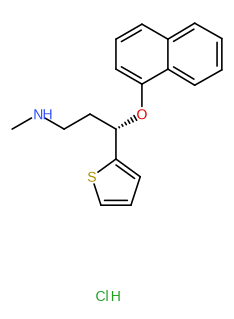 |
| Molecular structure drawn from PubChem coordinates |
| Rotamer [] | |
|---|---|
| Conformer structure via 3Dmol.js |
| Physical properties [] | |
|---|---|
| Molecular mass | 297.40 g/mol [1] |
| Solubility | 2.96e-03 g/L [1] |
| Predicted LogP | 4.3 [1] |
| Structural Identifiers [] | |
|---|---|
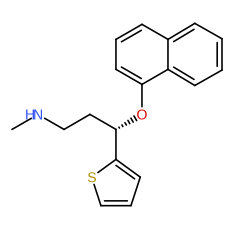
| Molecular formula | C18H19NOS |
| IUPAC name | (3S)-N-methyl-3-naphthalen-1-yloxy-3-thiophen-2-ylpropan-1-amine |
| SMILES | CNCC[C@@H](C1=CC=CS1)OC2=CC=CC3=CC=CC=C32 |
| InChI | InChI=1S/C18H19NOS/c1-19-12-11-17(18-10-5-13-21-18)20-16-9-4-7-14-6-2-3-8-15(14)16/h2-10,13,17,19H,11-12H2,1H3/t17-/m0/s1 |
| InChIKey | ZEUITGRIYCTCEM-KRWDZBQOSA-N |
| CAS number | 116539-59-4 |
| UNII | O5TNM5N07U |
| PubChem CID | 60835 |
| Pharmacokinetics[] | |
|---|---|
| Elimination half-life | 10–12 hours |
| Metabolism | Liver, two P450 isozymes, CYP2D6 and CYP1A2 |
| Excretion | 70% in urine, 20% in feces |
| Routes of administration | By mouth |
Duloxetine (also known as (S)-Duloxetine, Yentreve, Duloxetina, 2-Thiophenepropanamine, N-methyl-γ-(1-naphthalenyloxy)-, (γS)-, Ly248686, (3S)-N-methyl-3-(1-naphthyloxy)-3-(2-thienyl)propan-1-amine, methyl[(3S)-3-(naphthalen-1-yloxy)-3-(thiophen-2-yl)propyl]amine, (S)-N-Methyl-γ-(1-naphthalenyloxy)-2-thiophenepropanamine, 2-Thiophenepropanamine, N-methyl-γ-(1-naphthalenyloxy)-, (S)- or duloxetinum) is a serotonin-norepinephrine reuptake inhibitor substance of the phenol class.
Chemistry
Salts []
Stereochemistry []
Duloxetine is a single defined stereoisomer (optical activity ( + )).
Druglikeness
Lipinski's rule of five
Duloxetine matches Lipinski's rule of five.Reagents
There are currently 3 reagent-interactions on DrugsPRO
| Reagent | Color change | Description |
|---|---|---|
| Marquis | no color change | |
| Mecke | no color change | |
| Mandelin | no color change |
Pharmacology
ATC Classification
- nervous system (N)
- psychoanaleptics (N06)
- antidepressants (N06A)
- other antidepressants (N06AX)
- (N06AX21)
- duloxetine (N06AX21)
MeSH Classification
- analgesics (M0001067)
- antidepressive agents (M0001384)
- serotonin and noradrenaline reuptake inhibitors (M000603649)
- dopamine agents (M0023499)
Mechanism of action []
Duloxetine is a potent inhibitor of neuronal serotonin and norepinephrine reuptake and a less potent inhibitor of dopamine reuptake. Duloxetine has no significant affinity for dopaminergic, adrenergic, cholinergic, histaminergic, opioid, glutamate, and GABA receptors. Action on the external urinary sphincter is mediated via duloxetine's CNS effects. Increased serotonin and norepinephrine concentrations in Onuf's nucleus leads to increased activation of 5-HT<sub>2</sub>, 5-HT<sub>3</sub>, and α<sub>1</sub> adrenergic receptors. 5-HT<sub>2</sub> and α<sub>1</sub> are both G<sub>q</sub> coupled and their activation increases the activity of the inositol trisphosphate/phospholipase C (IP<sub>3</sub>/PLC) pathway. This pathway leads to release of intracellular calcium stores, increasing intracellular calcium concentrations, and facilitating neuronal excitability. 5-HT<sub>3</sub> functions as a ligand-gated sodium channel which allows sodium to flow into the neuron when activated. Increased flow of sodium into the neuron contributes to depolarization and activation of voltage gated channels involved in action potential generation. The combined action of these three receptors contributes to increased excitability of the pudendal motor nerve in response to glutamate. Also related to duloxetine's action at the spinal cord is its modulation of pain. Increasing the concentration of serotonin and norepinephrine in the dorsal horn of the spinal cord increases descending inhibition of pain through activation of 5-HT<sub>1A</sub>, 5-HT<sub>1B</sub>, 5-HT<sub>1D</sub>, 5-HT<sub>2</sub>, 5-HT<sub>3</sub>, α<sub>1</sub>-adrenergic, and α<sub>2</sub>-adrenergic receptors. 5-HT<sub>2</sub>, 5-HT<sub>3</sub>, and α<sub>1</sub>-adrenergic mediate neuronal activation as described above. The activated neuron in this case is the GABAergic inhibitory interneuron which synapses onto the nociceptive projection neuron to inhibit the transmission of painful stimuli to the brain. The 5-HT<sub>1</sub> and α<sub>2</sub> receptors are G<sub>i</sub>/G<sub>o</sub> coupled and their activation leads to increased potassium current through inward rectifier channels and decreased adenylyl cyclase/protein kinase A signaling which contributes to neuronal inhibition. These inhibitory receptors are present on the projection neuron itself as well as the dorsal root ganglion which precedes it and serves to directly suppress the transmission of painful stimuli. The mechanisms involved in duloxetine's benefits in depression and anxiety have not been fully elucidated. Dysfunctional serotonin and norepinephrine signaling are thought to be involved and increases in the availability of these neurotransmitters at the synaptic cleft thought to mediate a therapeutic effect. It is postulated that the involvement of serotonin and norepinephrine in area responsible for emotional modulation such as the limbic system contributes to the effects in mood disorders specifically but this has yet to be confirmed. Duloxetine's hypertensive effect is related to its intended pharmacological effect. Increased availability of norepinephrine leads to activation of adrenergic receptors on the vascular endothelium. Since the action of α<sub>1</sub> receptors predominates, vasoconstriction results as the G<sub>q</sub> coupled receptor mediates calcium release from the sarcoplasmic reticulum to facilitate smooth muscle contraction. [1]
Interactions []
Medical side effects []
316 side effects listed on drug labels in SIDER 4.1 (duloxetine).
- Nausea
- Headache
- Dry mouth
- Constipation
- Dizziness
- Syncope
- Asthenia
- Fatigue
- Insomnia
- Somnolence
- Diarrhoea
- Loose stools
- Decreased appetite
- Anorexia
- Hyperhidrosis
- Sweating increased
- Abdominal pain
- Gastrointestinal pain
- Neck pain
- Hypoglycaemia
- Nasopharyngitis
- Nervousness
- Feeling jittery
- Tension
- Nightmare
- Skin ulcer
- Myalgia
- Musculoskeletal discomfort
- Arthralgia
- Increased appetite
- Abdominal discomfort
- Initial insomnia
- Middle insomnia
- Libido decreased
- Disturbance in sexual arousal
- Muscle spasms
- Upper respiratory tract infection
- Vomiting
- Agitation
- Erectile dysfunction
- Anxiety
- Back pain
- Low back pain
- Cough
- Seasonal allergy
- Rhinitis seasonal
- Influenza
- Musculoskeletal pain
- Tremor
- Urinary tract infection
- Migraine
- Ejaculation delayed
- Vision blurred
- Laryngeal pain
- Pain
- Dyspepsia
- Body temperature increased
- Orgasm abnormal
- Palpitations
- Paraesthesia
- Penis disorder
- Weight decreased
- Yawning
- Viral diarrhoea
- Ejaculation disorder
- Blood pressure increased
- Oropharyngeal pain
- Pollakiuria
- Micturition urgency
- Alopecia
- Anaemia
- Ataxia
- Atrial fibrillation
- Colitis
- Conjunctivitis
- Dermatitis exfoliative
- Diverticulitis
- Eczema
- Oedema
- Flushing
- Gingivitis
- Cardiac failure
- Cardiac failure congestive
- Hypercholesterolaemia
- Irritable bowel syndrome
- Functional gastrointestinal disorder
- Nephropathy
- Leukopenia
- Macular degeneration
- Mydriasis
- Oliguria
- Phlebitis
- Prurigo
- Retinal detachment
- Thrombocytopenia
- Urinary incontinence
- Urinary retention
- Bundle branch block right
- Photopsia
- Oedema peripheral
- Sjogren's syndrome
- Gamma-glutamyltransferase increased
- Liver function test abnormal
- Muscular weakness
- Aspartate aminotransferase increased
- Alanine aminotransferase increased
- Urinary hesitation
- Abdominal pain lower
- Pressure of speech
- Abnormal dreams
- Rash erythematous
- Blood creatinine increased
- Hepatic enzyme increased
- Blood pressure systolic increased
- Blood pressure diastolic increased
- Ejaculation failure
- Epigastric discomfort
- Lymphadenopathy
- Coordination abnormal
- Influenza like illness
- Impaired gastric emptying
- Face oedema
- Urine flow decreased
- Maculopathy
- White blood cell count increased
- Oropharyngeal swelling
- Oesophageal stenosis
- Hyperkeratosis
- Hypersomnia
- Sluggishness
- Musculoskeletal stiffness
- Haematochezia
- Coronary artery disease
- Hepatic steatosis
- Loss of libido
- Dysphagia
- Hypertriglyceridaemia
- Blood triglycerides increased
- Aggression
- Anaphylactic shock
- Anger
- Angioedema
- Mental disorder
- Breast disorder
- Bruxism
- Infection
- Confusional state
- Feeling abnormal
- Malaise
- Connective tissue disorder
- Dehydration
- Dermatitis contact
- Diplopia
- Dysarthria
- Osteoarthritis
- Dysgeusia
- Dyskinesia
- Dysuria
- Ear pain
- Ecchymosis
- Endocrine disorder
- Eructation
- Erythema multiforme
- Stevens-Johnson syndrome
- Dermatitis
- Rash
- Extrapyramidal disorder
- Extrapyramidal symptoms
- Eye disorder
- Flatulence
- Gastritis
- Gastroenteritis
- Gastrointestinal disorder
- Gastrointestinal haemorrhage
- Glaucoma
- Angle closure glaucoma
- Breath odour
- Hallucination
- Cardiac disorder
- Blood disorder
- Haemorrhage
- Haemoglobin
- Hyperglycaemia
- Hyperlipidaemia
- Hyperprolactinaemia
- Hypersensitivity
- Hypertensive crisis
- Hypoaesthesia
- Hypoaesthesia facial
- Orthostatic hypotension
- Hypothyroidism
- Immune system disorder
- Irritability
- Laryngitis
- Lethargy
- Mediastinal disorder
- Melaena
- Menstrual disorder
- Myocardial infarction
- Acute coronary syndrome
- Myoclonus
- Nervous system disorder
- Night sweats
- Nocturia
- Polyuria
- Urine output increased
- Pruritus
- Restless legs syndrome
- Convulsion
- Gastric ulcer
- Stomatitis
- Aphthous stomatitis
- Suicide attempt
- Tachycardia
- Testicular pain
- Thirst
- Tinnitus
- Trismus
- Erythema
- Urethral disorder
- Urinary tract disorder
- Urticaria
- Angiopathy
- Vertigo
- Weight increased
- Chills
- Rigors
- Apathy
- Flat affect
- Mood swings
- Affect lability
- Malnutrition
- Photosensitivity reaction
- Skin disorder
- Discomfort
- Ill-defined disorder
- Muscle twitching
- Cold sweat
- Disorientation
- Disturbance in attention
- Anorgasmia
- Galactorrhoea
- Pharyngeal oedema
- Throat tightness
- Menopausal symptoms
- Hot flush
- Dyslipidaemia
- Hepatobiliary disease
- Peripheral coldness
- Urine odour abnormal
- Blood bilirubin increased
- Dry eye
- Mania
- Increased tendency to bruise
- Arrhythmia supraventricular
- Visual impairment
- Sexual dysfunction
- Gait disturbance
- Blood cholesterol increased
- Infestation
- Sleep disorder
- Sleep disturbance
- Completed suicide
- Muscle tightness
- Poor quality sleep
- Feeling hot
- Hepatitis
- Hyponatraemia
- Inappropriate antidiuretic hormone secretion
- Jaundice
- Shock
- Loss of consciousness
- Blood alkaline phosphatase increased
- Diabetes mellitus
- Serotonin syndrome
- Arrhythmia
- Chest pain
- Contusion
- Electric shock
- Epistaxis
- Hypertension
- Pain in extremity
- Pancreatitis
- Pharyngitis
- Rhabdomyolysis
- Supraventricular tachycardia
- Essential hypertension
- Hepatic failure
- Ventricular arrhythmia
- Drug withdrawal syndrome
- Blood creatine phosphokinase increased
- Secondary hypertension
- Liver injury
- Acute liver injury
- Traumatic liver injury
- Systolic hypertension
- Cardiac fibrillation
- Abdominal pain upper
- Abdominal tenderness
- Diastolic hypertension
- Hepatotoxicity
- Glycosylated haemoglobin increased
- Blood pressure diastolic decreased
- Akathisia
- Suicidal ideation
- Paraesthesia oral
- Terminal insomnia
- Orthostatic hypertension
- Haemorrhagic disorder
- Blood potassium increased
- Blood glucose increased
- Renal failure
- Renal impairment
- Suicidal behaviour
- Genital hypoaesthesia
- Labile hypertension
Indications
- Agitation
- Anxiety
- Bradypsychic response
- Cerebration impaired
- Chronic pain
- Decreased interest
- Depressed mood
- Diabetic
- Diabetic peripheral neuropathic pain
- Diabetic peripheral neuropathy
- Distress
- Dysphoria
- Fatigue
- Feeling guilty
- Fibromyalgia
- Generalised anxiety disorder
- Hypersensitivity
- Hypersomnia
- Insomnia
- Irritability
- Low back pain
- Major depression
- Major depressive disorder, single episode
- Musculoskeletal pain
- Neuralgia
- Osteoarthritis
- Sleep disturbance
- Suicidal ideation
- Suicide attempt
- Tension
Experience reports
Erowid
There are currently 15 experience reports involving duloxetine on Erowid: []- "Detachment" by Bree
- "Withdrawal Hell" by Pea
- "Haven't Felt Right Since I Took It" by Tately
- "A Few Interactions" by Qoheleth
- "Antidepressant Success Story" by the man
- "Horrible Side Effects From Normal Dose of SNRIs" by cp
- "Nostalgia" by Edgy
- "Gentler Comeup Anxious Comedown" by Grace
- "Dependence Stemming from Use for Depression" by Melita Filter
- "A Happy Sloth Quits Cold Turkey" by Zapped
- "Horrible, Awful Medication" by Wigster
- "Not the Best I've Tried" by Leigh
- "Happy Buzz" by roofie
- "It Is a Nice Relaxing Feeling" by Duloxetine/Cymbalta
- "Terrified to Go Off of It" by Alice
Legal status []
External links []
References []
National Center for Biotechnology Information. PubChem Compound Summary for CID 60835, Duloxetine. Accessed November 23, 2026. https://pubchem.ncbi.nlm.nih.gov/compound/60835
U.S. Food and Drug Administration; National Center for Advancing Translational Sciences. Duloxetine. UNII: O5TNM5N07U. Global Substance Registration System. Accessed November 23, 2026. https://gsrs.ncats.nih.gov/ginas/app/beta/substances/O5TNM5N07U
RDC Nº 784 - Listas de Substâncias Entorpecentes, Psicotrópicas, Precursoras e Outras sob Controle Especial. Diário Oficial da União. 31 March 2023. https://www.in.gov.br/en/web/dou/-/resolucao-rdc-n-784-de-31-de-marco-de-2023-474904992
Cymbalta PI. Union Register of medicinal products. 22 December 2004. https://ec.europa.eu/health/documents/community-register/html/h296.htm
Yentreve PI. Union Register of medicinal products. 13 August 2004. https://ec.europa.eu/health/documents/community-register/html/h280.htm
Data sources []
| Source | Status | Updated (UTC) |
|---|---|---|
| dosing | missing (no dosing statistics) | 2026-11-20 09:23:38 |
| drugspro | ok | 2026-11-20 09:23:33 |
| erowid | ok | 2026-11-20 09:23:36 |
| gsrs | ok | 2026-11-20 09:23:34 |
| hmdb | missing (hmdb.ca refused automated access to HMDB0014619) | 2026-11-20 09:23:33 |
| kegg | ok | 2026-11-20 09:23:37 |
| pubchem | ok | 2026-11-20 09:23:33 |
| ok | 2026-11-20 09:23:33 | |
| sider | ok | 2026-11-20 09:23:34 |
| structure | ok | 2026-11-20 09:23:33 |
| wikipedia | ok | 2026-11-20 09:23:34 |