Ibuprofen
| Ibuprofen | |
|---|---|
 |
| Salts [] | |
|---|---|
| Sodium ibuprofen | |
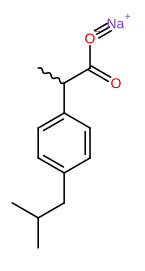 | |
| Sodium ibuprofen | |
| |
| Potassium ibuprofen | |
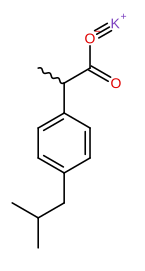 |
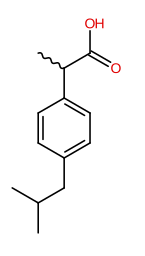
| Molecular structure drawn from PubChem coordinates |
| Physical properties [] | |
|---|---|
| Molecular mass | 206.28 g/mol [1] |
| Appearance | Colorless, crystalline stable solid [1] |
| Odor | Characteristic odor [1] |
| Melting point | 75-77.5 ºC [1] |
| Boiling point | 157 °C [1] |
| Decomposition | When heated to decomposition it emits acrid smoke and fumes. [1] |
| Solubility | 21 mg/L (at 25 °C) [1] |
| Predicted LogP | 3.5 [1] |
| Structural Identifiers [] | |
|---|---|
| Molecular formula | C13H18O2 |
| IUPAC name | 2-[4-(2-methylpropyl)phenyl]propanoic acid |
| SMILES | CC(C)CC1=CC=C(C=C1)C(C)C(=O)O |
| InChI | InChI=1S/C13H18O2/c1-9(2)8-11-4-6-12(7-5-11)10(3)13(14)15/h4-7,9-10H,8H2,1-3H3,(H,14,15) |
| InChIKey | HEFNNWSXXWATRW-UHFFFAOYSA-N |
| CAS number | 15687-27-1 |
| UNII | WK2XYI10QM |
| PubChem CID | 3672 |
| Pharmacokinetics[] | |
|---|---|
| Onset | 30 minutes[3] |
| Elimination half-life | 2–4 hours[4] |
| Metabolism | Liver (CYP2C9) |
| Excretion | Urine (95%)[5] |
| Routes of administration | By mouth, rectal, topical, intravenous |
| Toxicity [] | |
|---|---|
| LD50 | Mouse: - Oral: 1255mg/kg Rat: - oral: 636 mg/kg - ip: 626 mg/kg - sc: 740 mg/kg - rectal: 530 mg/kg [1] |
Ibuprofen (also known as 2-(4-Isobutylphenyl)propanoic acid, Brufen, Motrin, Advil, Liptan, Medipren, Nuprin, Nurofen, Anflagen or Buburone) is a cannabinoid, nonsteroidal anti-inflammatory drug, opioid and steroid substance.
Chemistry
Salts []
Stereochemistry []
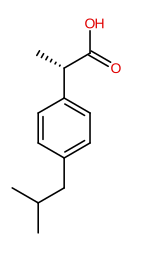
Ibuprofen is a racemic mixture of the enantiomers (optical activity ( + / - )).
| Stereoisomerism |
|---|
| Stereoisomers from PubChem |

Druglikeness
Lipinski's rule of five
Ibuprofen matches Lipinski's rule of five.Reagents
There are currently 7 reagent-interactions on DrugsPRO
| Reagent | Color change | Description |
|---|---|---|
| Marquis | no color change | |
| Mecke | light brown | |
| Mandelin | dark brown | |
| Liebermann | dark reddish brown | |
| Froehde | no color change | |
| Simon's | no blue color change | |
| Scott | no color change |
Pharmacology
ATC Classification
- cardiovascular system (C)
- cardiac therapy (C01)
- other cardiac preparations (C01E)
- other cardiac preparations (C01EB)
- ibuprofen (C01EB16)
- genito urinary system and sex hormones (G)
- other gynecologicals (G02)
- other gynecologicals (G02C)
- antiinflammatory products for vaginal administration (G02CC)
- ibuprofen (G02CC01)
- musculo-skeletal system (M)
- antiinflammatory and antirheumatic products (M01)
- antiinflammatory and antirheumatic products, non-steroids (M01A)
- propionic acid derivatives (M01AE)
- (M01AE01)
- ibuprofen (M01AE01)
- (M01AE01; C01EB16)
- topical products for joint and muscular pain (M02)
- topical products for joint and muscular pain (M02A)
- antiinflammatory preparations, non-steroids for topical use (M02AA)
- ibuprofen (M02AA13)
- respiratory system (R)
- throat preparations (R02)
- throat preparations (R02A)
- other throat preparations (R02AX)
- ibuprofen (R02AX02)
MeSH Classification
- anti-inflammatory agents, non-steroidal (M0001335)
- cyclooxygenase inhibitors (M0025664)
- analgesics, non-narcotic (M0028038)
Mechanism of action []
The exact mechanism of action of ibuprofen is unknown. However, ibuprofen is considered an NSAID and thus it is a non-selective inhibitor of cyclooxygenase, which is an enzyme involved in prostaglandin (mediators of pain and fever) and thromboxane (stimulators of blood clotting) synthesis via the arachidonic acid pathway. Ibuprofen is a non-selective COX inhibitor and hence, it inhibits the activity of both COX-1 and COX-2. The inhibition of COX-2 activity decreases the synthesis of prostaglandins involved in mediating inflammation, pain, fever, and swelling while the inhibition of COX-1 is thought to cause some of the side effects of ibuprofen including GI ulceration. [1]
Interactions []
Medical side effects []
309 side effects listed on drug labels in SIDER 4.1 (ibuprofen).
- Nausea
- Apnoea
- Eosinophilia
- Constipation
- Gastrointestinal disorder
- Somnolence
- Drowsiness
- Respiratory tract infection
- Vomiting
- Skin lesion
- Bronchopulmonary dysplasia
- Hyponatraemia
- Pulmonary haemorrhage
- Intraventricular haemorrhage
- Bacteraemia
- Hypocalcaemia
- Hypoglycaemia
- Hypoglycemic reaction
- Flatulence
- Abdominal bloating
- Headache
- Pneumonia bacterial
- Diarrhoea
- Hypoproteinaemia
- Blood lactate dehydrogenase increased
- Hypoalbuminaemia
- Thrombocytosis
- Respiratory failure
- Blood creatinine increased
- Creatinine increased
- Urinary tract infection
- Adrenal insufficiency
- Hypernatraemia
- Neutropenia
- Haemorrhage
- Haemoglobin
- Renal failure
- Renal impairment
- Kidney function abnormal
- Dizziness
- Syncope
- Lightheadedness
- Dyspepsia
- Heartburn
- Urinary retention
- Atelectasis
- Pneumothorax
- Oedema
- Anaemia
- Hypokalaemia
- Urine output
- Haemoglobin decreased
- Wound haemorrhage
- Oedema peripheral
- Foot edema
- Cough
- Cough increased
- Abdominal discomfort
- Abdominal distress
- Haematuria
- Blood urea increased
- Serum urea increased
- Renal failure acute
- Hypoxia
- Pruritus
- Gastrointestinal perforation
- Necrotising colitis
- Necrotising enterocolitis neonatal
- Abdominal pain
- Stomach ache
- Abdominal distension
- Gastrointestinal pain
- Acidosis
- Pancreatitis acute
- Agranulocytosis
- Alopecia
- Amblyopia
- Anaphylactic shock
- Anaphylactoid reaction
- Aplastic anaemia
- Haemolytic anaemia
- Angioedema
- Decreased appetite
- Appetite absent
- Anxiety
- Arrhythmia
- Arthralgia
- Musculoskeletal discomfort
- Myalgia
- Arthritis
- Asthenia
- Fatigue
- Asthma
- Exacerbation of asthma
- Asthma aggravated
- Mental disorder
- Bronchospasm
- Bronchitis
- Cholestasis
- Colitis
- Colitis ulcerative
- Proctocolitis
- Coma
- Infection
- Confusional state
- Feeling abnormal
- Malaise
- Conjunctivitis
- Contusion
- Crohn's disease
- Cystitis
- Bladder pain
- Cystitis noninfective
- Libido decreased
- Disturbance in sexual arousal
- Dysphagia
- Depression
- Dermatitis exfoliative
- Diplopia
- Duodenal ulcer
- Duodenitis
- Dyspnoea
- Dysuria
- Ecchymosis
- Toxic epidermal necrolysis
- Necrolysis epidermal
- Epistaxis
- Eructation
- Erythema multiforme
- Stevens-Johnson syndrome
- Oesophageal spasm
- Oesophagitis
- Dermatitis
- Rash
- Eruption
- Exhaustion
- Gastritis
- Gastroenteritis
- Gastrooesophageal reflux disease
- Gastrointestinal haemorrhage
- Glomerulonephritis
- Glossitis
- Glycosuria
- Gynaecomastia
- Hallucination
- Cardiac failure
- Cardiac failure congestive
- Haematemesis
- Blood disorder
- Hepatitis
- Hepatitis toxic
- Hepatorenal syndrome
- Inguinal hernia
- Hiccups
- Dysphonia
- Hyperglycaemia
- Hypersensitivity
- Hypertension
- Pulmonary hypertension
- Hypotension
- Immune system disorder
- Influenza
- Intestinal perforation
- Jaundice
- Renal papillary necrosis
- Periventricular leukomalacia
- Leukopenia
- Liver disorder
- Hepatocellular injury
- Foetor hepaticus
- Mediastinal disorder
- Melaena
- Meningitis aseptic
- Encephalitis
- Menorrhagia
- Metrorrhagia
- Mixed connective tissue disease
- Muscle spasms
- Hypertonia
- Myocardial infarction
- Acute coronary syndrome
- Nasal congestion
- Neoplasm
- Nephritis
- Tubulointerstitial nephritis
- Nephrotic syndrome
- Nervous system disorder
- Nervousness
- Tension
- Neuralgia
- Neuritis
- Neuropathy peripheral
- Oliguria
- Optic neuritis
- Palpitations
- Pancreatitis
- Pancytopenia
- Paraesthesia
- Peptic ulcer
- Pharyngitis
- Pneumonia
- Polyuria
- Urine output increased
- Proteinuria
- Protein urine present
- Benign intracranial hypertension
- Purpura
- Vascular purpura
- Henoch-Schonlein purpura
- Reye's syndrome
- Rhinitis
- Scotoma
- Convulsion
- Serum sickness
- Shock
- Sinusitis
- Skin disorder
- Unspecified disorder of skin and subcutaneous tissue
- Gastric ulcer
- Stomatitis
- Mouth ulceration
- Cerebrovascular accident
- Hyperhidrosis
- Swelling
- Loss of consciousness
- Tachycardia
- Sinus tachycardia
- Thirst
- Thrombocytopenia
- Tinnitus
- Tremor
- Ulcer
- Erythema
- Pollakiuria
- Urinary incontinence
- Urethral disorder
- Urinary tract disorder
- Urticaria
- Vasculitis
- Vasodilation procedure
- Vertigo
- Visual acuity reduced
- Visual impairment
- Visual disturbance
- Weight decreased
- Wheezing
- Dry mouth
- Chills
- Hepatic failure
- Sinus bradycardia
- Agitation
- Hyperkinesia
- Mood swings
- Affect lability
- Dermatitis bullous
- Vesiculobullous rash
- Cataract
- Hepatic function abnormal
- Musculoskeletal stiffness
- Nuchal rigidity
- Bleeding time prolonged
- Injection site reaction
- Liver function test abnormal
- Hepatic necrosis
- Rash pustular
- Malnutrition
- Hypopnoea
- Abdominal pain upper
- Epigastric pain
- Discomfort
- Ill-defined disorder
- Disorientation
- Abnormal dreams
- Dysarthria
- Respiratory depression
- Pulmonary function test decreased
- Euphoric mood
- Azotaemia
- Hepatic enzyme increased
- Necrotising fasciitis
- Cellulitis gangrenous
- Blood creatinine decreased
- Pulmonary congestion
- Respiratory tract congestion
- Erectile dysfunction
- Sepsis
- Rectal haemorrhage
- Hepatobiliary disease
- Fluid retention
- Toxic neuropathy
- Dry eye
- Cognitive disorder
- Vision blurred
- Photosensitivity reaction
- Influenza like illness
- Systemic lupus erythematosus
- Bruxism
- Lymphadenopathy
- Dysgeusia
- Local swelling
- Nephropathy toxic
- Glomerular filtration rate decreased
- Insomnia
- Epidermal necrosis
- Ileus
- Deafness
- Hearing impaired
- Renal tubular necrosis
- Colour blindness acquired
Indications
- Ache
- Acute pain
- Analgesic effect
- Ankylosing spondylitis
- Arthritis
- Arthropathy
- Autoimmune disorder
- Back pain
- Blood pressure increased
- Body temperature increased
- Bursitis
- Capsulitis
- Chronic pain
- Common cold
- Connective tissue disorder
- Cramp muscle
- Discomfort
- Dysmenorrhoea
- Ear pain
- Flu symptoms
- Frozen shoulder
- Haemorrhage
- Headache
- Inflammation
- Juvenile idiopathic arthritis
- Low back pain
- Migraine
- Myalgia
- Nausea
- Neuralgia
- Osteoarthritis
- Otitis media
- Pain
- Patent ductus arteriosus
- Postoperative pain
- Primary dysmenorrhea
- Renal impairment
- Rheumatoid arthritis
- Soft tissue injury
- Sprain
- Still's disease
- Systemic lupus erythematosus
- Tendonitis
- Tenosynovitis
- Tension headache
- Throat sore
- Toothache
- Ulcer
- Uterine pain
Subjective effects []
Experience reports
- "First trip on my 35th birthday" by pwnshroom (26 upvotes)
- "Dislocating my shoulder came as unexpected blessing" by koshim_ (25 upvotes)
- "So we’re condoning the use of hard lethal drugs now?" by WLSquire (18 upvotes)
- "LSD(400 UG) Trip Report, Insight Gained!" by gromclad (7 upvotes)
- "Color/4-HO-MET Trip Reports" by camerynlamare (5 upvotes)
- "Bad trip on Caffeine, Paracetamol and Ibuprofen?" by Red-Boxes (4 upvotes)
- "5g of APE revert cubensis" by LongDongMarathong (3 upvotes)
- "Broke a weed tolerance break and shrooms took over" by InteractionOver7732 (1 upvotes)
Legal status []
- Australia: Ibuprofen is a OTC.
- Canada: Ibuprofen is a OTC.
- United Kingdom: Ibuprofen is a GSL.
- United States: Ibuprofen is a OTC / Prescription only.
- European Union: Ibuprofen is a OTC.
External links []
References []
National Center for Biotechnology Information. PubChem Compound Summary for CID 3672, Ibuprofen. Accessed November 20, 2026. https://pubchem.ncbi.nlm.nih.gov/compound/3672
U.S. Food and Drug Administration; National Center for Advancing Translational Sciences. Ibuprofen. UNII: WK2XYI10QM. Global Substance Registration System. Accessed November 20, 2026. https://gsrs.ncats.nih.gov/ginas/app/beta/substances/WK2XYI10QM
ibuprofen. http://web.squ.edu.om/med-lib/med_cd/e_cds/Nursing%20Drug%20Guide/mg/ibuprofen.htm
Grosser T, Ricciotti E, FitzGerald GA. The Cardiovascular Pharmacology of Nonsteroidal Anti-Inflammatory Drugs. Trends in Pharmacological Sciences. August 2017; 38(8):733–748. PMID 28651847. https://doi.org/10.1016/j.tips.2017.05.008
Brufen Tablets And Syrup. Therapeutic Goods Administration. 31 July 2012. https://www.ebs.tga.gov.au/ebs/picmi/picmirepository.nsf/pdf?OpenAgent&id=CP-2009-PI-00035-3
Data sources []
| Source | Status | Updated (UTC) |
|---|---|---|
| dosing | missing (no dosing statistics) | 2026-11-20 08:00:31 |
| drugspro | ok | 2026-11-20 08:00:27 |
| erowid | missing (no Erowid substance of that name) | 2026-11-20 08:00:27 |
| gsrs | ok | 2026-11-20 08:00:30 |
| hmdb | missing (hmdb.ca refused automated access to HMDB0001925) | 2026-11-20 08:00:27 |
| kegg | ok | 2026-11-20 08:00:30 |
| pubchem | ok | 2026-11-20 08:00:25 |
| ok | 2026-11-20 08:00:27 | |
| sider | ok | 2026-11-20 08:00:27 |
| structure | ok | 2026-11-20 08:00:27 |
| wikipedia | ok | 2026-11-20 08:00:27 |