Melatonin
| Melatonin | |
|---|---|
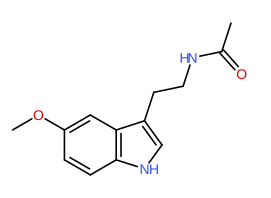 |
| Molecular structure drawn from PubChem coordinates |
| Physical properties [] | |
|---|---|
| Molecular mass | 232.28 g/mol [1] |
| Appearance | Pale yellow leaflets from benzene [1] |
| Melting point | 117 °C [1] |
| Solubility | In water, 2 g/L at 20 °C; 5 g/L at 50 °C [1] |
| Predicted LogP | 0.8 [1] |
| Structural Identifiers [] | |
|---|---|
| Molecular formula | C13H16N2O2 |
| IUPAC name | N-[2-(5-methoxy-1H-indol-3-yl)ethyl]acetamide |
| SMILES | CC(=O)NCCC1=CNC2=C1C=C(C=C2)OC |
| InChI | InChI=1S/C13H16N2O2/c1-9(16)14-6-5-10-8-15-13-4-3-11(17-2)7-12(10)13/h3-4,7-8,15H,5-6H2,1-2H3,(H,14,16) |
| InChIKey | DRLFMBDRBRZALE-UHFFFAOYSA-N |
| CAS number | 73-31-4 |
| UNII | JL5DK93RCL |
| PubChem CID | 896 |
| Toxicity [] | |
|---|---|
| LD50 | Rat: - Oral: 3200 mg/kg [1] |
Melatonin (also known as Melatonine, N-Acetyl-5-methoxytryptamine, Circadin, 5-Methoxy-N-acetyltryptamine, Melatol, N-(2-(5-Methoxy-1H-indol-3-yl)ethyl)acetamide, Melovine, Melapure, Acetamide, N-[2-(5-methoxy-1H-indol-3-yl)ethyl]- or N-[2-(5-methoxyindol-3-yl)ethyl]acetamide) is a depressant and hormone substance of the tryptamine class.
Chemistry
Stereochemistry []
Melatonin is achiral.
Druglikeness
Lipinski's rule of five
Melatonin matches Lipinski's rule of five.Reagents
There are currently 9 reagent-interactions on DrugsPRO
| Reagent | Color change | Description |
|---|---|---|
| Marquis | no color change | |
| Mecke | no color change | |
| Liebermann | light brown | |
| Froehde | no color change | |
| Simon's | no blue color change | |
| Ehrlich | reddish > purple | |
| Hofmann | yellow / orange > green | |
| Morris | pale green | |
| Zimmermann | orange |
Pharmacology
ATC Classification
- nervous system (N)
- psycholeptics (N05)
- hypnotics and sedatives (N05C)
- melatonin receptor agonists (N05CH)
- (N05CH01)
- melatonin (N05CH01)
MeSH Classification
Mechanism of action []
Melatonin is a derivative of tryptophan. It binds to melatonin receptor type 1A, which then acts on adenylate cylcase and the inhibition of a cAMP signal transduction pathway. Melatonin not only inhibits adenylate cyclase, but it also activates phosphilpase C. This potentiates the release of arachidonate. By binding to melatonin receptors 1 and 2, the downstream signallling cascades have various effects in the body. The melatonin receptors are G protein-coupled receptors and are expressed in various tissues of the body. There are two subtypes of the receptor in humans, melatonin receptor 1 (MT1) and melatonin receptor 2 (MT2). Melatonin and melatonin receptor agonists, on market or in clinical trials, all bind to and activate both receptor types.The binding of the agonists to the receptors has been investigated for over two decades or since 1986. It is somewhat known, but still not fully understood. When melatonin receptor agonists bind to and activate their receptors it causes numerous physiological processes. MT1 receptors are expressed in many regions of the central nervous system (CNS): suprachiasmatic nucleus of the hypothalamus (SNC), hippocampus, substantia nigra, cerebellum, central dopaminergic pathways, ventral tegmental area and nucleus accumbens. MT1 is also expressed in the retina, ovary, testis, mammary gland, coronary circulation and aorta, gallbladder, liver, kidney, skin and the immune system. MT2 receptors are expressed mainly in the CNS, also in the lung, cardiac, coronary and aortic tissue, myometrium and granulosa cells, immune cells, duodenum and adipocytes. The binding of melatonin to melatonin receptors activates a few signaling pathways. MT1 receptor activation inhibits the adenylyl cyclase and its inhibition causes a rippling effect of non activation; starting with decreasing formation of cyclic adenosine monophosphate (cAMP), and then progressing to less protein kinase A (PKA) activity, which in turn hinders the phosphorilation of cAMP responsive element-binding protein (CREB binding protein) into P-CREB. MT1 receptors also activate phospholipase C (PLC), affect ion channels and regulate ion flux inside the cell. The binding of melatonin to MT2 receptors inhibits adenylyl cyclase which decreases the formation of cAMP.[4] As well it hinders guanylyl cyclase and therefore the forming of cyclic guanosine monophosphate (cGMP). Binding to MT2 receptors probably affects PLC which increases protein kinase C (PKC) activity. Activation of the receptor can lead to ion flux inside the cell. [1]
Interactions []
Medical side effects []
130 side effects listed on drug labels in SIDER 4.1 (melatonin).
- Abdominal pain
- Gastrointestinal pain
- Aggression
- Angina pectoris
- Angioedema
- Anxiety
- Arthralgia
- Musculoskeletal discomfort
- Arthritis
- Asthenia
- Fatigue
- Back pain
- Mental disorder
- Breast disorder
- Neck pain
- Chest pain
- Infection
- Connective tissue disorder
- Dermatitis
- Rash
- Dizziness
- Syncope
- Dyspepsia
- Eczema
- Eye disorder
- Flatulence
- Gastritis
- Gastrooesophageal reflux disease
- Gastrointestinal disorder
- Glycosuria
- Breath odour
- Headache
- Cardiac disorder
- Haematuria
- Herpes zoster
- Hyperbilirubinaemia
- Hypersensitivity
- Hypertension
- Hypertriglyceridaemia
- Blood triglycerides increased
- Hypocalcaemia
- Hyponatraemia
- Immune system disorder
- Libido increased
- Disturbance in sexual arousal
- Irritability
- Lethargy
- Leukopenia
- Nail disorder
- Nasopharyngitis
- Nausea
- Nervous system disorder
- Nervousness
- Tension
- Night sweats
- Nightmare
- Nocturia
- Pain
- Pain in extremity
- Palpitations
- Paraesthesia
- Polyuria
- Urine output increased
- Priapism
- Prostatitis
- Proteinuria
- Protein urine present
- Prurigo
- Pruritus
- Psoriasis
- Restless legs syndrome
- Salivary hypersecretion
- Muscle spasms
- Night cramps
- Gastric disorder
- Shock
- Loss of consciousness
- Thirst
- Thrombocytopenia
- Erythema
- Urethral disorder
- Urinary tract disorder
- Angiopathy
- Vertigo
- Vomiting
- Weight increased
- Dry mouth
- Agitation
- Mood swings
- Affect lability
- Stomatitis
- Mouth ulceration
- Migraine
- Tongue disorder
- Tongue oedema
- Liver function test abnormal
- Dry skin
- Lacrimation increased
- Gastrointestinal sounds abnormal
- Malnutrition
- Skin disorder
- Abdominal discomfort
- Gastrointestinal tract irritation
- Abdominal pain upper
- Disorientation
- Disturbance in attention
- Memory impairment
- Abnormal dreams
- Visual acuity reduced
- Tongue ulceration
- Galactorrhoea
- Hepatic enzyme increased
- Oedema mouth
- Menopausal symptoms
- Hot flush
- Hand dermatitis
- Hepatobiliary disease
- Vision blurred
- Depressed mood
- Laboratory test abnormal
- Pruritus generalised
- Rash generalised
- Stress
- Vertigo positional
- Terminal insomnia
- Infestation
- Oral mucosal blistering
- Dreamy state
- Insomnia
- Somnolence
Indications
- Poor quality sleep
- Primary insomnia
Subjective effects []
| 0xea / Melatonin [] | |
|---|---|
Routes:
| |
| a1ko / Melatonin [] | |
|---|---|
Routes:
| |
| alina / Melatonin [] | |
|---|---|
Routes:
| |
| emily / Melatonin [] | |
|---|---|
Routes:
| |
| Pilz / Melatonin [] | |
|---|---|
Routes:
| |
| vivi / Melatonin [] | |
|---|---|
Routes:
| |
Experience reports
Erowid
There are currently 30 experience reports involving melatonin on Erowid: []- "The Reality from Behind Closed Eyelids" by Mount Analogue
- "Everything Feels Extremely Soft" by wobs
- "Totally Weird Reaction" by Ocaia_Gyna
- "Pillar of Faces" by Techlos
- "NooMania, Drugs of the Future" by Sonar87
- "Melatonin and Stress Related Insomnia" by Dan
- "Anxious Night" by Antidrug
- "Restful Sleep and Wild Dreams" by Aurora
- "Don't Make Assumptions" by 2C-Brett
- "My Little Helper" by lithid
- "Brain Soup Heart Soup" by Alacado Dolzinnig
- "The Sky is a Spider Web" by Grimer
- "A Few Interactions" by Qoheleth
- "Beautifully Scattered Dreamy Thoughts" by Delysid
- "Interesting Effects on Sleep and Dreaming" by Swami
- "Unusual Experience" by Yellow Archer
- "A First Course" by Loki
- "Unexpected Introspection and Lucid Dreaming" by Moc
- "Hope for Flying" by Batman
- "Hooked On It" by anonymous
- "A Rapid Fire Slideshow" by Dream Drifter
- "The Reason I Stopped Using It" by Mystical Llama
- "Vivid Inferno Dream" by Ggrowler
- "Getting Off" by Hippiefreak
- "Curing Insomnia" by Hedgy13
- "Experiments with Dream-Potentiating Herbs" by Matthew Mystik
- "Induced Sleep Paralysis" by Phil The Thrill
- "PTSD Night Terrors" by Tcat117
- "Lettuce Rest" by Baba Naga
- "Saved My Life" by ShadyBAB
- "Crazy visuals from 10mg of melatonin" by wheatmontana (55 upvotes)
- "DXM first time + Weed TRIP REPORT" by TheBeastOfTheNight (29 upvotes)
- "My homie had a ego death on shrooms while I was on 300+ ug of acid " by Prod-jzm (21 upvotes)
- "Friend on 500ug LSD accidentally took 600 mg of DXM and had a crazy ego death." by soupkid5 (15 upvotes)
- "First psilocybin trip" by TBKmama (13 upvotes)
- "First trip 4 grams of golden teachers" by Ambitious_Storage_21 (13 upvotes)
- "Took a tab yesterday and has a blissful time in the mountains near a waterfall 🙌" by SlamJr6 (11 upvotes)
- "Melatonin after your tab 🙏" by MrWaffleMonster (7 upvotes)
- "350mg of caffeine (5 espresso shots) vs 2 melatonin pills (10mg each) made me tweak in lecture yesterday" by Accomplished_Bowl219 (6 upvotes)
- "Another Acid Trip Report" by TeenieWeenieVegenee (5 upvotes)
- "Mind Blowing DOM Trip Report 2,5-Dimethoxy-4-methylamphetamine" by Lurendrejeriii (4 upvotes)
- "holy shit | 420mg DXM" by Educational_Cash_514 (3 upvotes)
- "Sleeping Gummies turned into a Trip" by Lyn_Ru (3 upvotes)
- "(3G) A very disorienting and uncomfortable experience, complete with an ego death" by sagoooo (3 upvotes)
- "Why did I trip for 26 hours?" by yellow-isnt-a-number (1 upvotes)
- "2 Grams of melatonin" by Jumpy_Revolution411 (1 upvotes)
- "Melatonin 30mg report" by Scatman3366 (0 upvotes)
See also []
External links []
References []
National Center for Biotechnology Information. PubChem Compound Summary for CID 896, Melatonin. Accessed November 20, 2026. https://pubchem.ncbi.nlm.nih.gov/compound/896
U.S. Food and Drug Administration; National Center for Advancing Translational Sciences. Melatonin. UNII: JL5DK93RCL. Global Substance Registration System. Accessed November 20, 2026. https://gsrs.ncats.nih.gov/ginas/app/beta/substances/JL5DK93RCL
Data sources []
| Source | Status | Updated (UTC) |
|---|---|---|
| dosing | missing (no dosing statistics) | 2026-11-20 06:26:57 |
| drugspro | ok | 2026-11-20 06:26:53 |
| erowid | ok | 2026-11-20 06:26:55 |
| gsrs | ok | 2026-11-20 06:26:53 |
| hmdb | missing (hmdb.ca refused automated access to HMDB0001389) | 2026-11-20 06:26:53 |
| kegg | ok | 2026-11-20 06:26:54 |
| pubchem | ok | 2026-11-20 06:26:52 |
| ok | 2026-11-20 06:26:53 | |
| sider | ok | 2026-11-20 06:26:53 |
| structure | ok | 2026-11-20 06:26:53 |
| wikipedia | missing (no Wikipedia article with a drug infobox) | 2026-11-20 06:26:53 |